






Fable Is Back. And Work Just Changed Again.
Hi all,
Two weeks ago, the most powerful AI model in the world went dark. Last week, it came back.
If you missed the story: Anthropic's Claude Fable (along with OpenAI's GPT-5.6) was briefly pulled after researchers discovered a jailbreak that could unlock it for genuinely nefarious purposes — think serious cybersecurity threats, not writing mean limericks. Meanwhile, early benchmarks suggested this isn't an incremental improvement. It's a stair-step. Reports indicate Fable can function autonomously for 12 to 24 hours on a single assignment.
Let me repeat that: you give it a task, walk away, and it works a full day without you.
We're Living Inside the Exponential
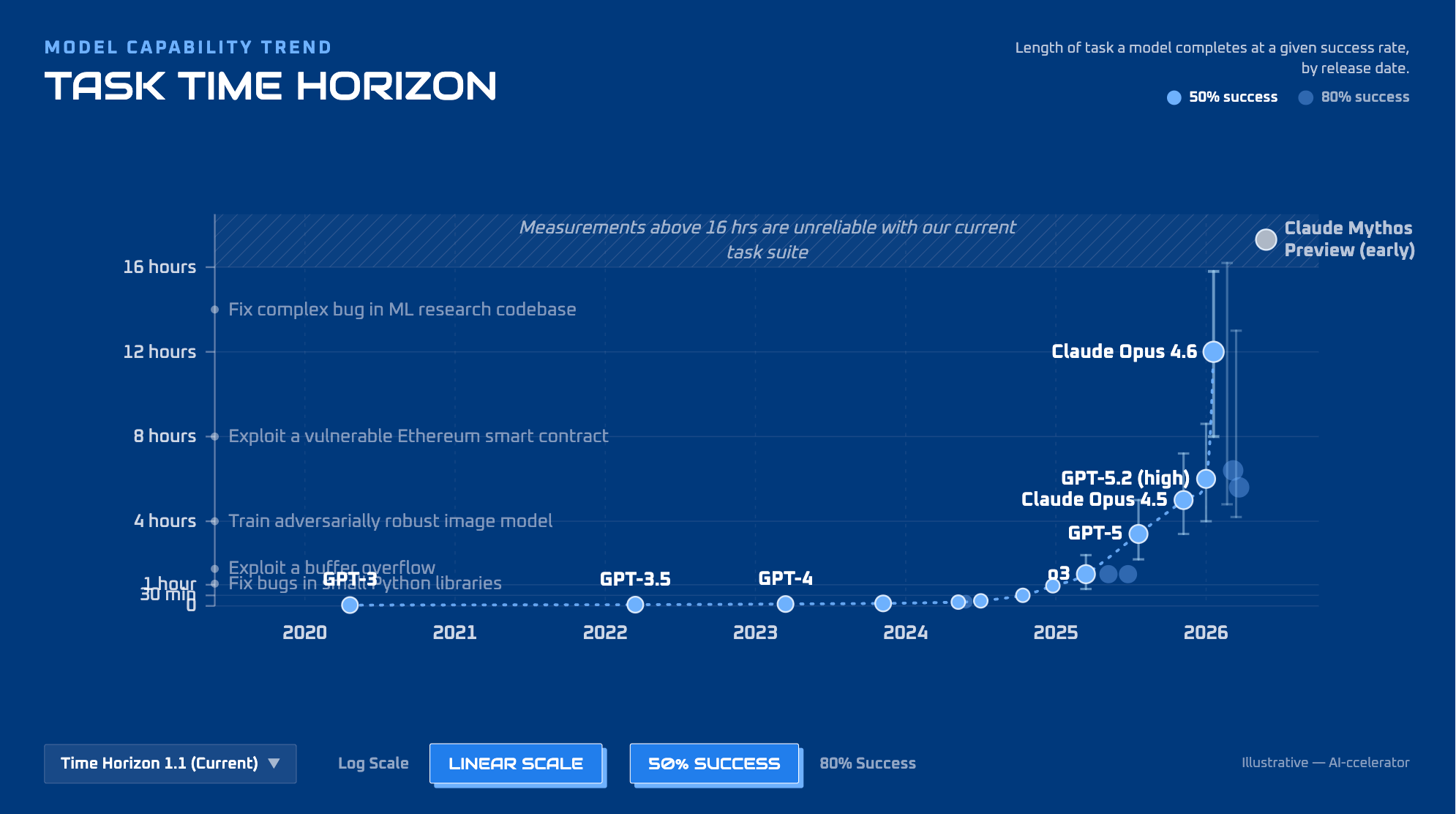
Look at where that curve is heading. We've officially crossed from the "pre-agentic" era into the agentic one, where a single prompt buys you a full day of autonomous execution.
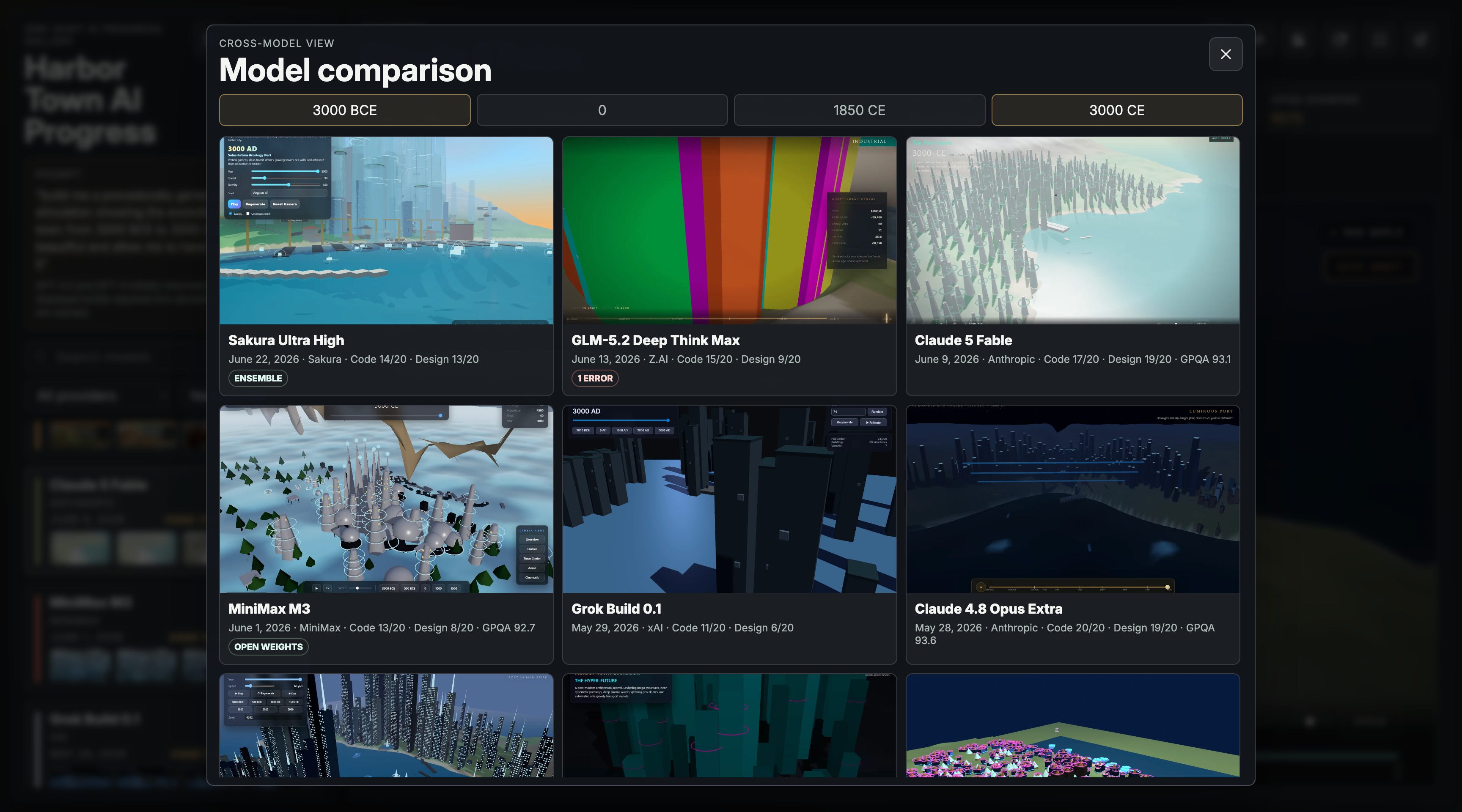
Ethan Mollick put it to the test: in his experiments, Fable worked autonomously for 9 hours on software projects that would have taken a team well over a week. He also ran a fun experiment having every major model build an interactive harbor town simulation— the differences in design and judgment across models are fascinating:
I write about this at length in Future Proof: technology improves exponentially, and human brains are wired for linear. We're terrible at feeling exponentials from the inside — and we're very much inside one right now.
Agent capabilities are doubling roughly every 7 months. Do the math: there will be a model twice as powerful as Fable by January 2027. The thing that works autonomously for a full day? That's the weak version.
From Chatbots to Org Charts
As agents take on longer tasks, work is evolving from co-working with chatbots to managing teams of agents that operate autonomously in the background.
This isn't theoretical. A joint study by OpenAI and academic economists found that a quarter of OpenAI's own workers have at least four agents running simultaneously every week — and legal, HR, and other non-technical functions are adopting them at nearly the same rate as engineers.
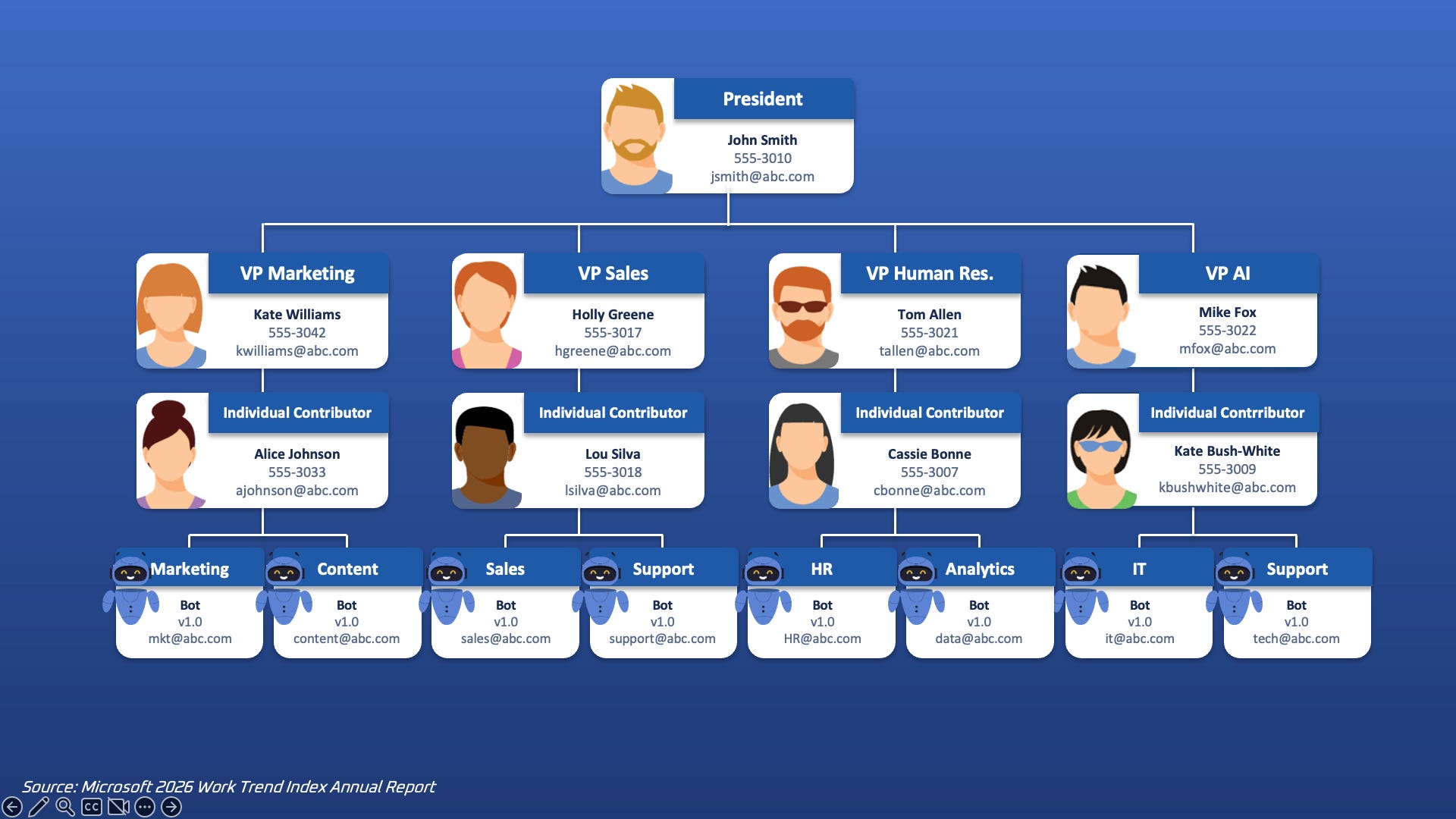
So here's the question I've started posing to executives: if I waved a magic wand and gave you a team of 50 or 100 tireless, capable workers, how would you assign them work? How would you manage them?
That's not a hypothetical. That's the question frontier professionals are answering right now.
Meanwhile, Back on Earth...
In spite of all this, the vast majority of employees are still using LLMs like a glorified Google search.
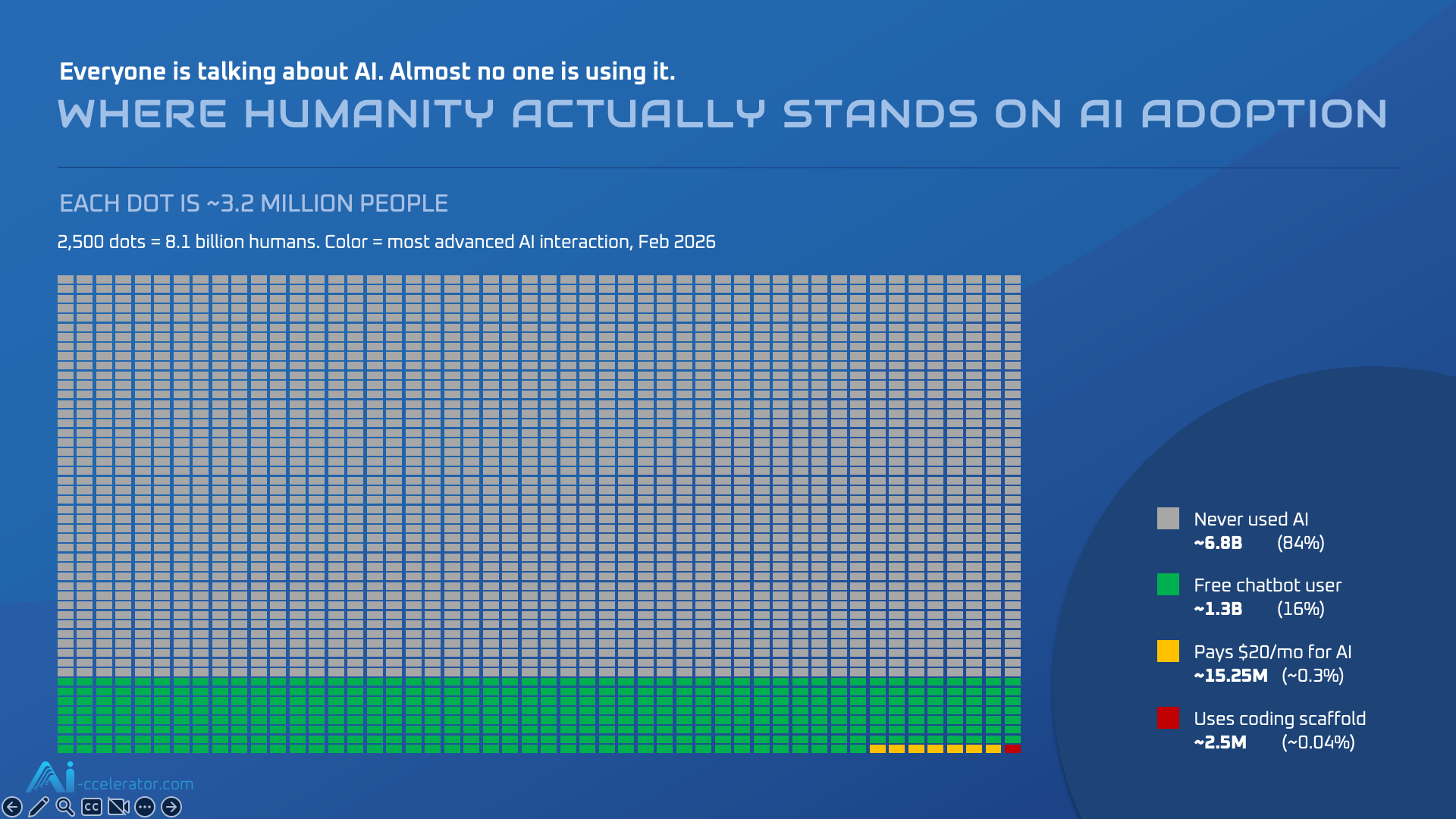
Of the 8.1 billion humans on this planet, roughly 84% have never used AI at all. Only around 15 million — 0.3% of humanity — pay for the advanced versions of these tools. The number using agentic scaffolds? A rounding error.
The gap between what the tools can do and what the users can do is growing wider every quarter. Organizations that get it are reinventing how work happens. Those that don't are already struggling to keep up — they just may not know it yet.
That gap is exactly why I developed the AI Performance Lab with my business partner, Alan VanToai. We believe it's the single biggest challenge organizations face right now: not access to AI, but the sustained practice it takes to use it at the frontier.
If you or your organization wants to stay on the frontier — or get there — hit reply and let's talk.
Best,
Dr. Michael "House" Housman
P.S. As always, feel free to hit reply — I read every one.