






I gave Claude all my passwords. Here's what happened....
Hi all,
About 25 years ago, I was an intern at The Urban Institute, a think tank in DC. My boss taught on the side, and one day he brought a guest into class: John Koskinen, the man the White House had hired to be the “Y2K czar.”
Quick history lesson for the millennials on this list: most software back then stored years as two digits — “99,” not “1999.” When the clock hit 2000, systems would read “00” as 1900, and nobody knew what would break: banks, airlines, power grids. Companies and governments spent hundreds of billions fixing code, and the White House hired John to make sure nothing went down.
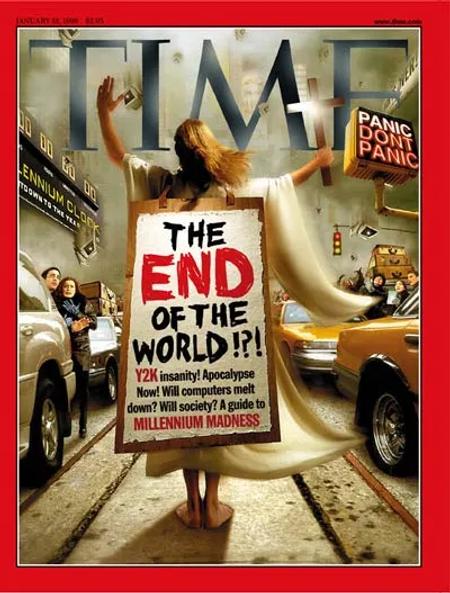
John told our class a story I’ve never forgotten. He had so much confidence in the preparation that he booked himself a flight on New Year’s Eve 1999. In the air. At midnight. While he was mid-air, he passenger next to him happened to strike up a conversation, asked what he did, learned mid-flight that a software bug could theoretically bring down the plane, and promptly had a panic attack.
The plane landed fine. Everything was fine. A few small systems needed patches on the morning of January 1st, and that was it. In retrospect, people look back and think we overreacted (who knows — maybe the preparation is exactly WHY nothing broke). But at the time, the fear was everywhere.
Sound familiar?
I think about John every time I get the question I hear most from audiences: “Is my data safe with AI?”
It’s the Y2K question of our moment. The fear is understandable. And just like Y2K, an enormous amount of engineering has gone into making sure the answer is yes. The LLM providers hear this question constantly, so they’ve baked safeguards deep into their systems: you can opt out of having your data used for training. Enterprise plans don’t train on your data at all — it’s the default, not a setting. There’s “zero data retention” mode, where your prompts aren’t stored, period. Encryption in transit and at rest, SOC 2 compliance, the works.
And if you still don’t trust the big labs, there are open-weight models you can run entirely on your own hardware — nothing ever leaves your machine. (Fair warning: many of the best ones come from Chinese companies, which is its own trust calculation. I personally pass.)
So I put my money where my mouth is
There are a lot of alarmists out there — about job automation, about data privacy, about all of it. Rather than argue, I decided to run a test on myself.
As a personal productivity project, I’ve been using AI agents to organize my entire digital life. Files scattered across machines with different structures and naming conventions. An email inbox that had descended into chaos. And passwords split across three different platforms — some current, some hopelessly stale.
The password project was the real test. Here’s the question in its plainest form: do I trust Claude enough to hand its agents ALL of my passwords?
Yes. Yes, I do.
Over about 2-3 days, Claude consolidated logins from iCloud Keychain, Google Password Manager, and Evernote into 1Password, where they all live now. It merged duplicates, verified which credentials were current, organized everything across Personal and Work, and even flagged the passwords weak enough that I should be embarrassed about them. Apparently “password1234” wasn’t fooling anyone. Who knew??
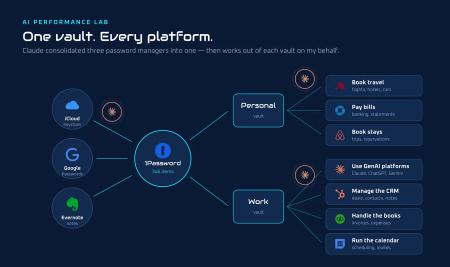
I’m thrilled with the results. And there’s a bonus: with everything consolidated and current, Claude’s agents can now log into platforms and do work on my behalf. The cleanup wasn’t just hygiene, it was infrastructure. (Of course, if all my personal information shows up in a data breach next month, I reserve the right to revise this newsletter.)
Twenty-five years ago, the world did the unglamorous work and midnight came and went without a crash. I’d bet the same is true here: the fears are loudest right before the preparation quietly pays off.
So here’s my question for you: what’s a personal project you’ve been putting off that AI could probably handle?
Best,
Dr. Michael “House” Housman